
Rheumatology Services
Joint Injections in Manassas, VA
Joint injections in Manassas, VA can deliver medication directly into or around a painful, swollen joint. At Arthritis & Osteoporosis Center of Northern Virginia, our rheumatologists offer joint injections in the office as one part of a broader plan for arthritis, gout, bursitis, and other joint conditions.
- Board-certified rheumatologists
- Most insurance plans accepted
- Mon to Fri, 8am to 5pm
In-office procedure
Targeted relief for inflamed joints
What Are Joint Injections?
A joint injection places medication into a joint space (an intra-articular injection) or into nearby soft tissue such as a bursa or tendon sheath. Because the medicine goes where the pain is, it can work more directly than a pill that travels through the whole body.
Injections are not right for every person or every joint. Your clinician will recommend one only after confirming your diagnosis and reviewing your overall health.
Types of Joint Injections We May Discuss
- Corticosteroid injections calm inflammation and are often used for flares of osteoarthritis, gout, bursitis, or a few persistently active joints in rheumatoid arthritis.
- Hyaluronic acid injections are sometimes considered for knee osteoarthritis.
- Platelet-rich plasma (PRP) uses a concentrate from your own blood and may be discussed for certain joint and tendon problems.
The best option depends on your diagnosis, the joint involved, and your goals. Some injections are guided with musculoskeletal ultrasound to help place the medication accurately.
Benefits and Limitations
Joint injections are a nonsurgical option that may reduce pain and improve movement, particularly in the short term. They can help you stay active and participate in exercise or physical therapy. It is also important to know that:
- Relief is often temporary rather than permanent
- Responses vary from person to person
- Injections usually work best as part of a larger treatment plan
- There are limits on how often some medications can be injected into the same joint
Safety and Questions to Ask
Joint injections are common in rheumatology practice. Possible side effects include soreness at the injection site, a temporary rise in blood sugar after steroid injections, bruising, and, rarely, infection. Before your injection, it helps to ask:
- What diagnosis is this injection treating?
- Which medication will be used, and why?
- How long might relief last?
- What should I do or avoid afterward?
- What are my alternatives?
Why Choose Our Manassas Office for Joint Injections
A swollen joint can have several causes, so the right treatment starts with the right diagnosis. Our rheumatologists evaluate joint pain every day and can perform a joint aspiration to test fluid when the cause is unclear. Our office at 8100 Ashton Avenue serves patients from Manassas, Gainesville, Bristow, Haymarket, Centreville, and across Prince William County.
Next steps
Schedule your visit
Call (703) 361-3255 or request an appointment online. Our Manassas office is open Monday to Friday, 8am to 5pm.
Related pages
Related Conditions
Conditions This Service Supports
Learn more about the conditions this service is commonly used to evaluate or treat at our Manassas office.
Osteoarthritis
Joint pain and stiffness from cartilage wear
Rheumatoid Arthritis
Inflammatory joint pain, swelling, and stiffness
Gout & Pseudogout
Crystal-related joint flares
Bursitis & Tendinitis
Soft tissue pain and inflammation
Psoriatic Arthritis
Joint inflammation linked to psoriasis
Carpal Tunnel Syndrome
Hand numbness, tingling, and weakness
Your Care Team
Clinicians Who Provide This Service
Our board-certified rheumatologists and nurse practitioners work together on your care. Meet the clinicians at our Manassas office.





Nurse practitioner
Certified Registered Nurse Practitioner
FAQs
Joint Injection Questions
Answers to common questions from patients in Manassas and nearby Northern Virginia communities.
How long does a joint injection take?
The injection itself usually takes only a few minutes. Plan for extra time to review your history, prepare the area, and go over aftercare instructions.
How soon will I feel relief?
Some patients notice improvement within a few days, while others take longer. A local anesthetic may give brief relief right away. Your clinician will explain what to expect for the medication you receive.
Which joints can be injected?
Knees, shoulders, hips, wrists, hands, ankles, elbows, and the soft tissues around them can often be treated. Your clinician will decide whether an injection is appropriate for your specific joint and diagnosis.
Can I drive home after a joint injection?
Most patients can drive after a joint injection. If a large joint in the leg is treated, your clinician may suggest resting it for the rest of the day.
Related Services
Other Services at Our Manassas Office
Many patients use more than one of our in-office services as part of a complete care plan.
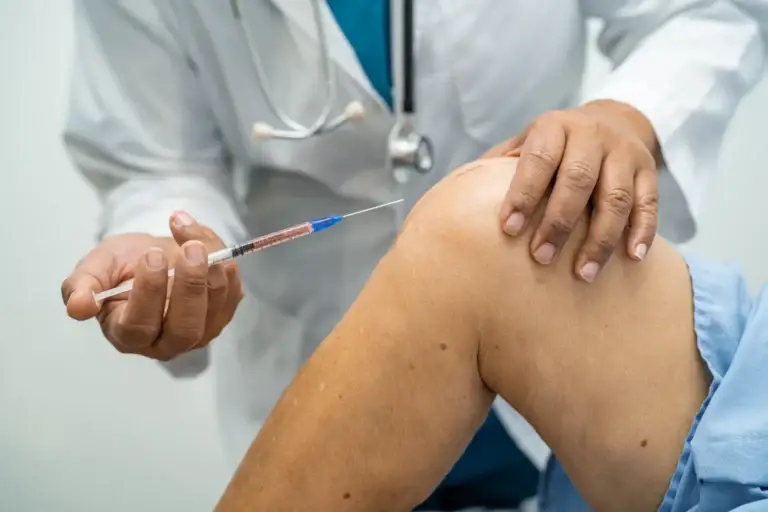
Removing and testing fluid from a swollen joint to help find the cause, such as gout or infection.
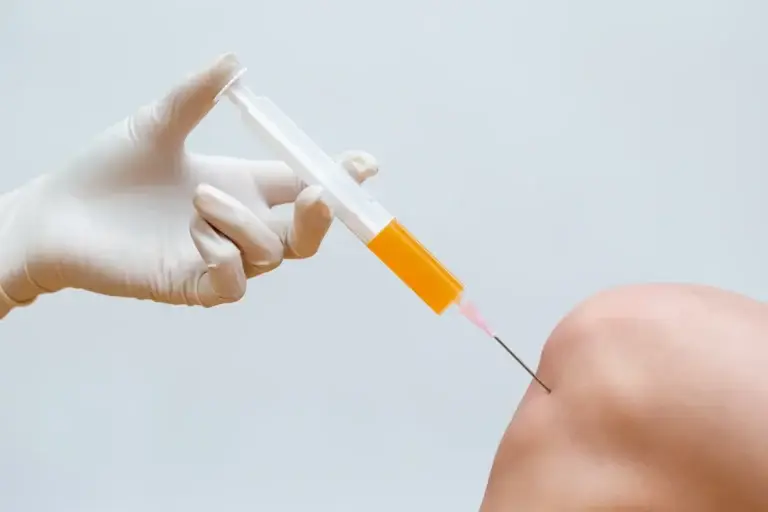
Platelet-rich plasma injections for certain joint, tendon, and ligament problems.
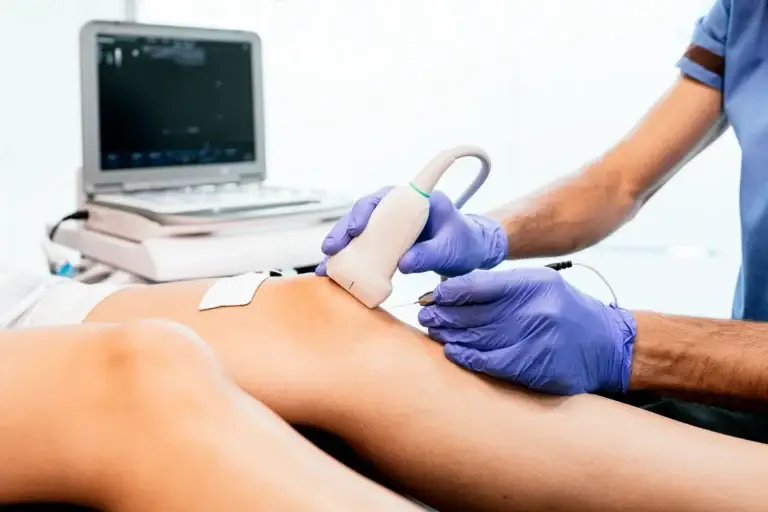
Radiation-free, real-time imaging of joints, tendons, and soft tissue to look for inflammation.

Request an Appointment
Talk to a Rheumatologist About Joint Pain
Find out whether a joint injection fits your care plan. Request an appointment online or call (703) 361-3255.